Power, Principle and the Speaker: Why the Fakafanua Controversy Requires Clear Consequences
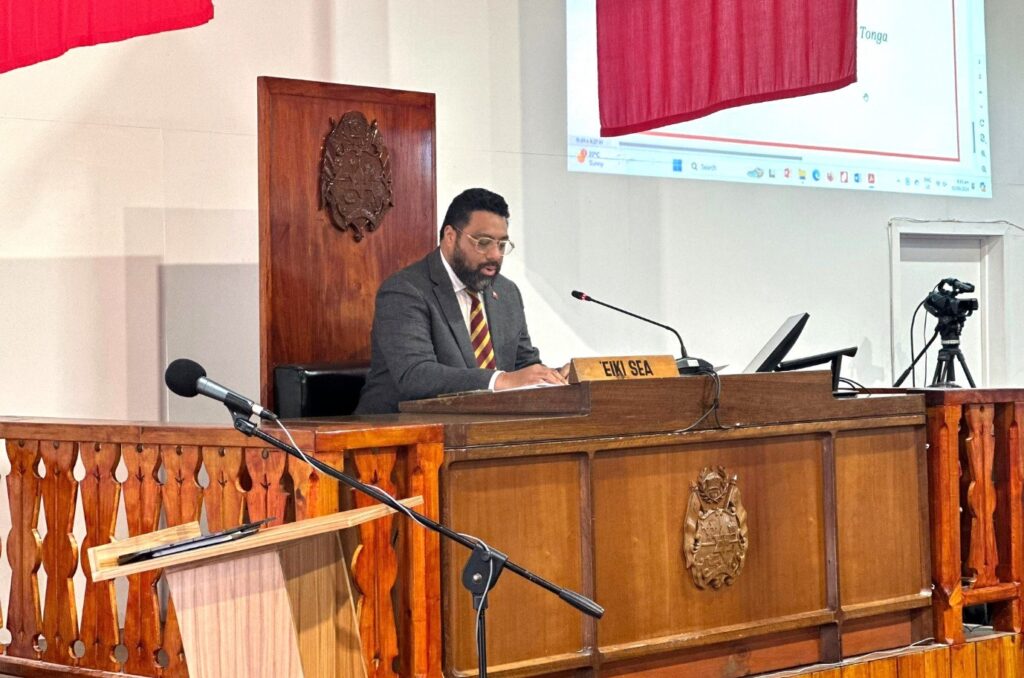
In every political system, there are moments when the health of the nation’s institutions is tested—not by catastrophe or crisis, but by something subtler: the way power is handled behind closed doors. Tonga finds itself at such a moment now. As Parliament prepares to choose a new Prime Minister, a debate surrounding Speaker of the Legislative Assembly Lord Fakafanua has quietly evolved into a broader reckoning about the standards that hold the country’s democracy together.
The controversy did not begin dramatically. It began, as consequential things often do, with a proposal. A confidential scheme developed with global investment-migration firm Henley & Partners suggested that Tonga could raise substantial revenue by granting citizenship in exchange for major financial contributions. Other nations have experimented with similar models; some have prospered, others have regretted it. But in Tonga, the sensitivity is not about the idea itself—it is about who was involved in the discussion, and how.
Individuals familiar with those discussions say lobbyists connected to the proposal met senior officials between 2023 and 2025, including the Permanent Representative to the United Nations, a former Prime Minister and the Attorney General. They say Lord Fakafanua was also approached. Nothing unlawful is alleged; the proposal did not progress. Yet in politics, the issue is often not what happened, but what the public can confidently understand about what happened.
Lord Fakafanua has insisted his role was limited to offering broad reflections on ways to ease Tonga’s fiscal pressures. He has long argued that overreliance on development partners exposes the nation to uncertainty and that responsible leaders should explore additional revenue options. That is a defensible position. But it is not the end of the story.
The matter sharpened when it emerged that a relative by marriage sits on the board of the company linked to the proposal. Again, this is not evidence of wrongdoing. In a country as tightly interwoven as Tonga, familial proximity is often unavoidable. But democracies operate not just on legality, but on legitimacy—and legitimacy relies on public confidence that private networks are not given precedence over public duty.
That tension has surfaced elsewhere. Lord Fakafanua chairs Tonga Rugby League 13, a code that has enjoyed significant government funding in recent years. Several sporting bodies have asked how allocations are determined, particularly as the relevant Ministry is headed by one of his relatives. This, too, is not an allegation of misconduct. It is a question about the adequacy of the guardrails meant to protect public decision-making from perceptions of partiality. And perceptions matter—especially in sectors like sport, where funding decisions determine whether communities, clubs and young athletes thrive or struggle.
Some officials within the Ministry have privately expressed frustration about unclear internal processes. These accounts remain unverified, but they add to a growing sentiment that Tonga’s oversight arrangements have not kept pace with the country’s rising expectations of transparency.
All of this is unfolding while Tonga’s political class focuses on the next Prime Ministerial vote. The possibility—rare in recent cycles—that a noble may enter the contest has unsettled political assumptions. Earlier reporting suggested the Monarch had encouraged nobles to stand back from direct political leadership. If the Speaker were to put his hand forward now, the question becomes sharper: how does a system ensure neutrality when its institutional figures are simultaneously actors in the political contest?

This question gained further weight only months ago when Tonga hosted the Commonwealth Latimer House Dialogue in Nukuʻalofa—a gathering dedicated to the principles that separate democratic authority from personal interest. The Latimer House Principles are unambiguous: parliamentary office holders must maintain both real and perceived independence from matters that could compromise public trust.
In Australia and New Zealand, speakers routinely remove themselves from discussions where a potential conflict may emerge. Not because culpability is assumed, but because the institution must be shielded from suspicion. This is the very calculus that keeps democracies functioning—acting early to prevent problems rather than waiting for them to erupt.
Tonga, having endorsed those same principles, now faces its own institutional examination. The question is not whether Lord Fakafanua has done wrong. The question is whether Tonga’s governance framework is fit for a future in which expectations of transparency are rising, conflicts of interest are more visible, and political authority is more contested.
Parliament may decide that disclosure requirements must be strengthened. It may conclude that oversight of public funding needs greater independence or clarity. Or it may simply formalise the recusal practices that mature democracies take for granted. None of these steps prejudges any individual. Instead, they affirm the integrity of the system itself.
The debate triggered by the citizenship proposal has exposed something larger than a single policy or personality. It has revealed the fine balance between power and principle—and the importance of tending to that balance with care. Tonga’s institutions do not face a crisis. They face a choice.
And the measure of Tonga’s political confidence will lie not in the issues that emerge, but in the strength of the standards the nation is willing to uphold when they do.
Tuʻifua Vailena