Editorial: A Nation That Trains Its Youth Must Also Be Ready to Employ Them
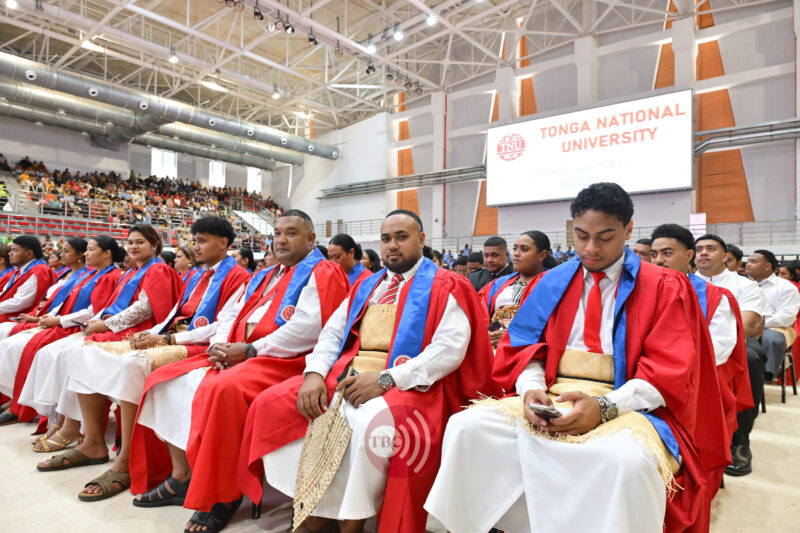
Tonga National University’s second graduation ceremony marked an impressive milestone: nearly 600 young adults receiving qualifications across teaching, nursing, engineering, tourism, business, maritime studies, and the trades. Their families filled the Tonga High School Indoor Stadium with pride, and rightly so. These graduates represent years of effort, discipline, and aspiration. They have done everything asked of them.
But once the gowns are packed away, a far more difficult question comes into view: what has government done to ensure these newly qualified young people can actually build their futures here at home?
Tonga faces an uncomfortable truth. We celebrate our graduates each year, yet we have not built an economy capable of absorbing them. Nurses leave for better pay overseas. Teachers join seasonal labour schemes. Skilled tradespeople migrate for short-term contracts because the domestic market cannot offer stable employment. This is not a failure of the graduates; it is a failure of national planning.
Establishing a national university was a positive development. It has expanded access to training and reduced the cost of gaining qualifications. But education alone cannot fix the workforce crisis. A university can produce certificates and degrees—only a functioning economy can produce careers. Without job opportunities, we are effectively training workers for someone else’s country.
This gap in thinking was laid bare during this year’s election campaign. Not one candidate presented a coherent agenda for job creation. There were promises about transparency, governance, and reform, but the central question facing Tonga’s future—how to generate employment for our young people—went almost entirely unaddressed. It is impossible to talk about retaining nurses, teachers, and technicians when no plan exists to strengthen the industries that would employ them.

If government is serious about keeping Tongan talent in Tonga, then it must move beyond rhetoric and commit to economic measures that support private-sector growth. That means investment in business development, easier access to capital, and policies that encourage enterprises to expand and hire. It means identifying the sectors where Tonga has natural advantage—construction, tourism, marine services, agriculture—and ensuring they are backed with the financial and regulatory support needed to generate jobs.
The graduates we applauded this week are standing at the beginning of their working lives. Some will pursue further study. Others are ready to enter the workforce today. But without opportunities at home, many will follow the same path taken by thousands before them—onto a flight to New Zealand or Australia, not because they want to leave, but because they cannot afford to stay.
Tonga cannot continue this cycle. A country that invests in training its youth must be equally committed to employing them. If we genuinely want nurses in our hospitals, teachers in our classrooms, and skilled tradespeople in our communities, then government must act decisively to build the jobs that keep them here.
Six hundred graduates crossed the stage this week. Whether they remain in Tonga in five years’ time depends not on the university, but on the choices our leaders make now.
Tu’ifua Vailena