United Nations Rebukes Israel with Overwhelming Vote Calling for Withdrawal from Occupied Palestinian Territories
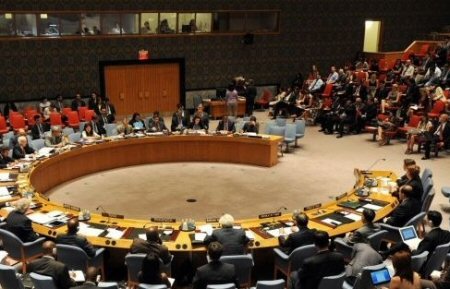
The United Nations General Assembly has delivered one of its strongest political messages in years on the Israeli–Palestinian conflict, adopting a resolution that calls for Israel’s complete withdrawal from all Palestinian territories occupied since 1967, including East Jerusalem. The resolution, backed by an overwhelming 151 member states, reaffirms what it describes as the “inalienable rights” of the Palestinian people, including the right to self-determination, the establishment of an independent state, and a just resolution of the long-contested refugee issue.
Although General Assembly resolutions are not legally binding, the scale of the vote has drawn widespread international attention. Only 11 countries voted against the measure, among them Israel and the United States, while 11 others abstained. A detailed roll-call has not yet been published by the UN, but early diplomatic reporting suggests most “no” votes came from states traditionally aligned with Israel in geopolitical or security frameworks. The abstaining bloc appears to be a mix of Western, Asian, and Pacific states that often tread cautiously on Israel–Palestine resolutions, though again the official list remains unavailable.
The resolution’s substance goes further than the symbolic language often seen in previous UN debates. It demands Israel “end its unlawful presence” in the occupied territories, halt all settlement activity immediately, and evacuate settlers from Palestinian land, echoing findings from the 2024 advisory opinion of the International Court of Justice which held that Israel’s occupation violates international law. It also rejects any attempts to alter the demographic or territorial status of Jerusalem, making clear that unilateral changes will not be recognised by the international community. For many member states, this language reflects mounting frustration after decades of stalled negotiations, recurring violence, and deepening humanitarian crises in Gaza and the West Bank.
Palestinian authorities hailed the vote as a declaration of renewed international consensus around their national aspirations. Diplomats supporting the resolution argued that an overwhelming majority of UN members continue to uphold the principles of a two-state solution rooted in pre-1967 borders. Several states framed the vote as part of a broader effort to restore international law’s relevance at a moment when global conflicts—from Ukraine to the Red Sea—have tested the credibility of multilateral institutions.

Israel, however, dismissed the resolution as one-sided and detached from security realities. Its representatives argued that meaningful progress can only come through direct negotiations rather than what they describe as political manoeuvring in the UN. The United States took a similar view, maintaining that resolutions which isolate Israel will not bring the parties closer to peace. Both governments claimed the text failed to acknowledge militant violence targeting Israeli civilians or Israel’s security concerns around Gaza and the West Bank.
For many smaller states—particularly in the Pacific, the Caribbean, and Africa—the vote reflects a longstanding pattern of supporting Palestinian self-determination on principle, even while maintaining diplomatic ties with both sides. In recent years these states have also expressed concern over humanitarian conditions in Gaza, noting that unresolved Middle East tensions continue to influence global aid flows, regional stability, and the priorities of major powers.
The resolution’s political significance lies less in altering immediate realities on the ground, and more in reshaping diplomatic momentum. With 151 votes in favour, the General Assembly has reaffirmed a near-global rejection of settlement expansion and unilateral annexation. While the resolution will not, by itself, compel Israeli withdrawal or restart peace negotiations, it consolidates international legal and diplomatic expectations at a moment when the conflict remains one of the world’s longest-running unresolved crises.
As the international community awaits the UN’s full roll-call record, the vote has already influenced the broader conversation about what a future settlement might look like. Whether this renewed political signal results in any tangible shift in the positions of Israel, the Palestinian Authority, regional powers, or the major international brokers remains uncertain. But the overwhelming majority recorded in New York underscores a message many states appear determined to repeat: the occupation must end, and a viable Palestinian state remains central to any credible vision of Middle Eastern peace.